
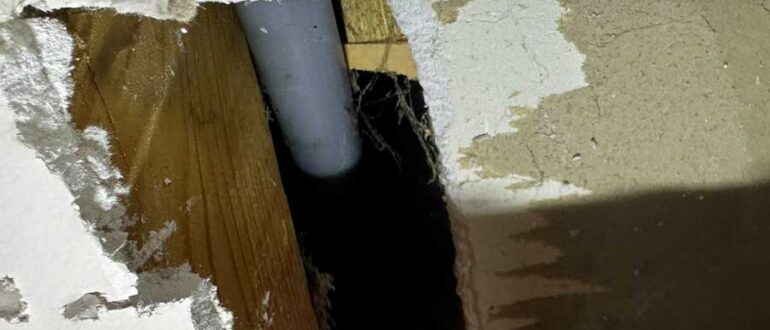
Have you ever looked inside the pipework under your sink and wondered what those pipes sticking out are? If you have noticed that these protruding pipes look like plastic, the material is called PEX. The abbreviation PEX stands for “cross linked polyethylene”. Imagine a rubber hose designed to carry water throughout your home. During the manufacturing process, the plastic forms an extremely durable material that is flexible and bends easily around corners. This incredible flexibility makes it a favourite for modern plumbing systems as it is easy to install.
Why is PEX popular with new installations?
Builders love how fast they can install PEX compared to traditional copper pipes. A single coil of PEX can run from a manifold to a fixture without a single joint in between. The flexibility allows for snaking through walls and floors with minimal complications. PEX offers a clear advantage. The installation process requires fewer tools. This makes training new workers simpler and faster. Additionally, the material does not corrode like metal pipes do. It is resistant to the acidic water conditions that often plague copper systems. This peace of mind drives builders to choose PEX over other options.
Durability of PEX pipe
How long PEX materials actually survive under constant daily pressure. You can expect this plastic tubing to perform flawlessly for forty to fifty years without showing signs of wear. It naturally resists the internal scaling and mineral buildup that plagues metal lines over decades of use. However, you must keep it away from direct sunlight because ultraviolet rays break down the plastic layers. A common concern involves pex vs copper pipe health.
Durability of copper pipe
Copper pipe has a legendary reputation for longevity, and it earns that praise. This metal has been the standard for plumbing for over a century. Many homes still operate on original copper lines installed decades ago. The material is incredibly strong and rigid, resisting physical damage from impacts. It handles high water pressure without bulging or bursting. Copper also has natural antimicrobial properties which are a bonus for water purity. However, copper does face specific durability challenges. Acidic water can cause pinhole leaks over time, eating away at the metal from the inside. The material is susceptible to corrosion from soil conditions if buried outside. Copper also suffers from electrolysis if improperly grounded, which accelerates deterioration. The longevity is highly dependent on water chemistry and installation quality. When considering how long does pex last vs copper, the answer varies.
The cost of PEX and copper pipe
Money talks, and this is where the plastic option truly win. The most important factor, of course, is the cost of PEX. The material itself costs almost five times less than copper. Beyond the raw material, you must factor in the cost of labor. Running copper requires special cutting tools, soldering torches, flux, and some skills. Pushing plastic connections together takes a seconds of the time and requires very little specialized training. People frequently ask is pex pipe better than copper when they see the final invoice. This brings us to the ultimate question of should we use pex or copper for my specific budget. If you’re on a tight budget and don’t want to splash out, then PEX is the way to go.
Conclusion
Many experienced plumbers believe that copper’s prestige and the metal’s exceptional heat resistance justify its higher price. And we, as specialists in water leak detection, have our own argument.
We frequently visit homes to detect leaks, and all newly built homes use PEX. Unfortunately, our statistics show that PEX is prone to the very same pinholes found in old copper pipes. However, the difference to copper, in our case, the PEX pipes were not old and had not even reached the halfway point of their service life. One of the most common occurrences is an internal rupture or crack in a PEX pipe, resulting in a water leak. We would like to draw your attention to several of our investigations where we discovered a water leak within a wall.
The cause of this leak was a ruptured PEX pipe. We can only speculate as to why the rupture occurred, but it is clear that a material which costs five times less than copper is bound to have its shortcomings.
You get what you pay for.